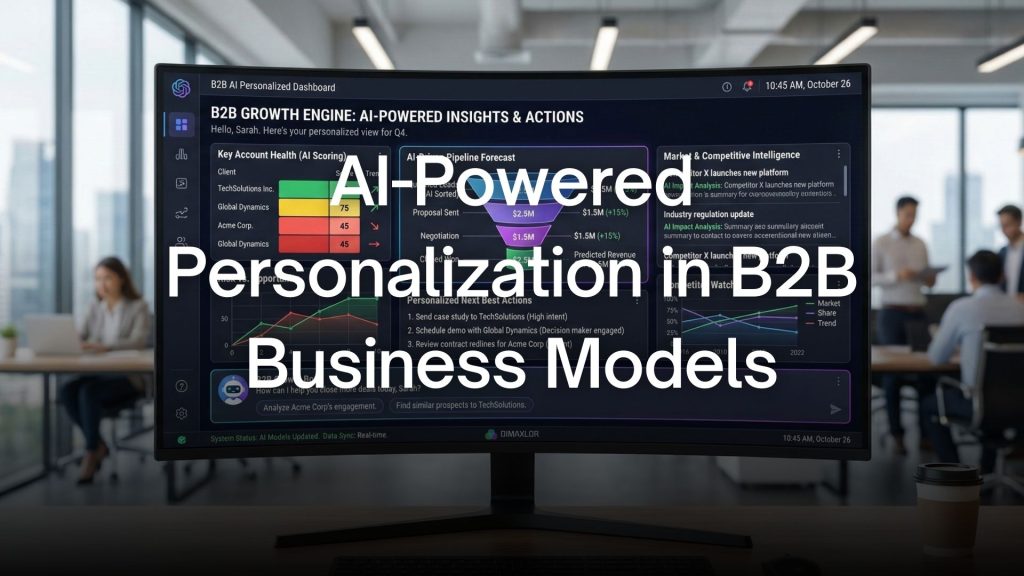
AI-Powered Personalization in B2B Business Models: The Ultimate Guide
Introduction: Why AI-Powered Personalization is a Game-Changer for B2B
In the modern B2B landscape, personalization is no longer optional, it’s a competitive necessity. AI-powered personalization is revolutionizing how businesses engage with clients, turning generic interactions into hyper-relevant experiences that drive loyalty, efficiency, and revenue.
Why It Matters
73% of B2B buyers now expect personalized experiences (McKinsey, 2025).
AI-driven personalization boosts sales productivity by 34% (Salesforce, 2025).
Companies using AI in B2B report 25% higher customer engagement (Gartner, 2025).
What This Guide Covers
The evolution of B2B personalization and AI’s role.
Real-world use cases of AI-driven personalization.
A step-by-step plan to implement AI in your business.
Future trends and how to prepare for 2026.
The Evolution: From Manual Efforts to AI-Driven Precision
The Old Way: Manual Segmentation and Static Content
For years, B2B personalization relied on:
Manual segmentation (industry, company size, job title).
Static content (generic emails, whitepapers, case studies).
Reactive engagement (slow response times).
The Problem: This approach is inefficient, hard to scale, and often misses the mark.
How AI Powers Personalization in B2B: Real-World Use Cases
AI in Sales: Smarter Lead Scoring & Dynamic Pricing
Predictive Lead Scoring: AI analyzes past interactions and firmographics to prioritize high-intent leads.
Dynamic Pricing: AI adjusts pricing in real-time based on demand and customer value.
AI-Powered CRM: Tools like HubSpot and Zoho recommend personalized follow-ups, reducing sales cycles by 20-40% (SuperAGI).
Case Study: IBM’s Watson AI helps sales teams by analyzing millions of data points to recommend the most relevant product configurations.
AI in Marketing: Hyper-Personalized Campaigns
Personalized Email Campaigns: AI optimizes send times, subject lines, and content (e.g., Marketo, Pardot).
Account-Based Marketing (ABM): AI identifies high-value accounts and tailors messaging for each stakeholder.
AI Chatbots: Tools like Drift and Intercom qualify leads and provide instant, personalized responses.
Stat: AI-driven personalization can enhance customer satisfaction by 15 to 20 percent (Mckinsey 2025)
AI in Customer Success: Proactive Retention
Churn Prediction: AI flags at-risk customers by analyzing usage patterns.
Personalized Onboarding: AI customizes training and support based on the customer’s role and industry.
Automated Upsell/Cross-sell: AI recommends relevant products based on usage data.
Case Study: Adobe Experience Cloud uses AI to deliver personalized product recommendations, increasing upsell revenue by 15% (Adobe, 2022).
AI in Product Development: Building What Customers Need
Sentiment Analysis: AI scans customer feedback to identify pain points.
Feature Prioritization: AI predicts which features will drive the most value.
Stat: AI development consistently delivers 30% faster product launches compared to traditional methods (SmartDev 2025)
Step-by-Step Guide: Implementing AI Personalization
Step 1: Unify Your Data
Integrate CRM, ERP, and marketing automation tools.
Use a Customer Data Platform (CDP) like Segment or Tealium.
Step 2: Choose the Right AI Tools
Use Case
AI Tool
Key Benefits
Sales Automation
Salesforce Einstein
Predictive lead scoring
Marketing Personalization
HubSpot AI
Dynamic content recommendations
Customer Support
Zendesk Answer Bot
Instant, personalized responses
Step 3: Pilot & Measure
Start with one team (e.g., sales).
Track KPIs: Conversion rates, customer lifetime value (CLV), retention.
Step 4: Scale & Optimize
Expand AI to other teams based on results.
Use A/B testing to refine AI models.
The Future of AI in B2B: What’s Coming in 2026?
Generative AI for Hyper-Personalized Content
AI will generate custom proposals, reports, and video messages tailored to each prospect.
AI-Powered Voice & Audio Personalization
Voice assistants will deliver personalized audio updates for B2B buyers.
AI in B2B Marketplaces
Platforms like Amazon Business will use AI for real-time buyer-supplier matching.
AI-Driven Partnerships
AI will identify strategic partnership opportunities by analyzing market trends.
Overcoming Challenges in AI Adoption
Challenge
Solution
Data Silos
Implement a unified CDP
High Costs
Start with low-code AI tools
Team Resistance
Train teams on AI benefits
Privacy Concerns
Use GDPR-compliant AI models
Your AI-Powered B2B Roadmap: Key Takeaways and Next Steps
Key Takeaways
AI personalization boosts conversions, retention, and revenue.
Start with one use case (sales, marketing, or customer success).
Measure ROI and scale based on data.
Next Steps
Audit your current personalization strategy.
Pilot an AI tool (e.g., HubSpot AI for marketing).
Track KPIs and refine your approach.
FAQs: Common Questions About AI in B2B Personalization
What is AI-powered personalization in B2B?
AI-powered personalization uses machine learning and data analytics to create tailored experiences—like dynamic pricing, personalized emails, and product recommendations—for B2B buyers at scale.
How does AI improve B2B sales?
AI scores leads, predicts churn, and recommends next-best actions, increasing conversion rates by up to 30% (Salesforce, 2025).
What are the best AI tools for B2B personalization?